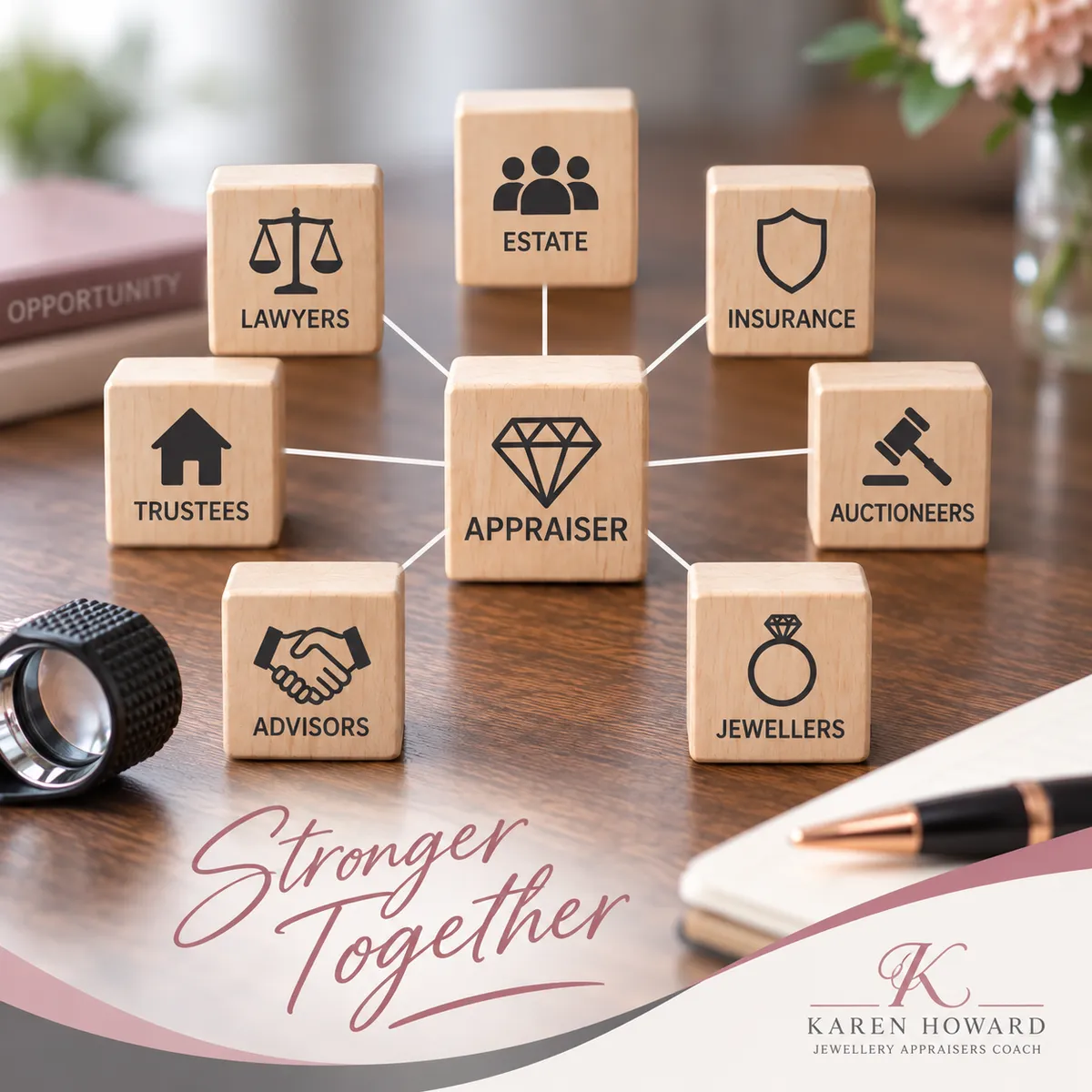
Who’s Referring Your Next Client
Why the Best Referral Partners Aren’t Always the Most Obvious Ones
When jewellery appraisers think about referral relationships, one of the first places they often look is the local jewellery store.
And that makes sense.
Jewellers regularly meet customers who need appraisal services, and strong relationships with reputable jewellers can certainly help grow your practice.
But they aren't the only people who meet potential appraisal clients.
Some of your best referral relationships may come from professionals you haven't considered yet.

Think About the Situation, Not Just the Jewellery
People don't usually wake up one morning and decide, “I think I'll get my jewellery appraised today.”
Usually, something has happened.
A parent has passed away. A couple is separating. Someone is reviewing their insurance. A family is dividing inherited jewellery. An executor is settling an estate. Someone wants to sell jewellery they know very little about.
The appraisal is often part of a much bigger situation.
So instead of asking:
“Who knows people who own jewellery?”
Ask:
“Who works with people at the moment they discover they need an appraisal?”
That one question can completely change the way you think about referrals.
Look Beyond Jewellery Stores
Estate professionals may work with executors and families who need help understanding or documenting jewellery during the estate process.
Lawyers may encounter jewellery in estate matters, family law situations or disputes involving personal property. They may need an independent professional who understands intended use, documentation and defensible conclusions.
Insurance professionals may have clients with outdated appraisals, significant new purchases, inherited jewellery or collections that haven't been reviewed in years.
Auctioneers, estate liquidators and resale professionals regularly encounter jewellery whose owners may know very little about what they have or what their next step should be.
And don't overlook other jewellery professionals—goldsmiths, designers, gemmologists, buyers, repair professionals and even other appraisers.
Yes, even other appraisers.
No appraiser handles every type of assignment. A good professional network gives you trusted people to refer to when something falls outside your expertise—and those referrals can work both ways.
Don't Start With “Can You Send Me Clients?”
This is where referral building often goes wrong.
A referral relationship shouldn't begin with asking someone for business.
Start by learning about their business.
What kinds of clients do they work with? What situations do they regularly encounter? When does jewellery become a problem or question for their clients?
Then help them understand where your expertise fits.
You're not asking them to become your salesperson.
You're making yourself a trusted resource for the moment one of their clients says:
“I have jewellery. What am I supposed to do with it?”
Make Yourself Easy to Refer
Even someone who thinks highly of you may struggle to refer you if they can't clearly explain what you do.
Your referral partners don't need to memorize your qualifications, equipment or appraisal methodology.
They simply need to understand:
who you help,
what situations you handle,
when someone should contact you, and
how to reach you.
And remember, when another professional refers someone to you, they're putting a little bit of their own reputation on the line.
The experience you provide their client matters.
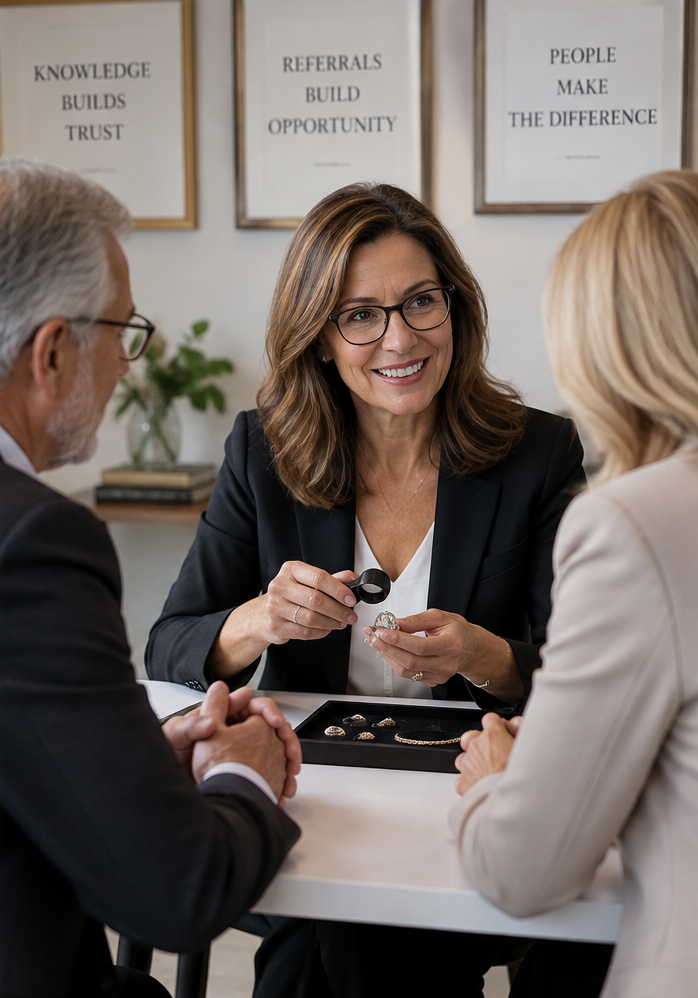
Build Relationships, Not a Contact List
Twenty names in a database aren't necessarily twenty referral partners.
Real referral relationships take time.
Stay in touch. Share useful information. Say thank you when someone sends a client your way. Refer appropriate clients back when you can.
Most importantly, don't disappear until you need something.
The goal isn't to collect contacts. It's to build a professional network of people who understand what you do and trust you enough to introduce you to their clients.
Look Beyond the Obvious
If you've concentrated primarily on jewellery stores, keep those relationships—but widen the circle.
Think about the professionals who are already talking to people when jewellery needs to be valued, documented, insured, divided, inherited or sold.
Those professionals may never need an appraisal themselves.
But they may regularly meet people who do.
Sometimes your next great source of business isn't another potential client. It's the person your future client already trusts.
